Mouth ulcers are painful but usually harmless. Most heal by themselves within one to two weeks. Occasionally, though, a sore, patch or lump that doesn't heal is an early sign of something that needs attention, including oral cancer, which is common in India because of tobacco, gutka and paan use. Knowing the difference can make a real difference.
The short answer
A typical ulcer is round, shallow, white or yellow with a red border, and painful. It heals within two weeks. See a dentist if an ulcer, white or red patch, or lump in your mouth has not healed after two weeks, keeps coming back in the same place, or is painless and getting bigger. A dentist can examine it in a few minutes and refer you for further tests if needed.
Common, harmless causes
- Accidental bites, a hard toothbrush, or a sharp or broken tooth rubbing the cheek or tongue.
- Braces, dentures or rough fillings that rub.
- Stress, lack of sleep and illness.
- Low iron, vitamin B12 or folate.
- Hormonal changes, for example around periods.
- Certain foods or toothpastes; some people react to very spicy or acidic food, or to sodium lauryl sulphate in toothpaste.
Warning signs: get it checked
- An ulcer that hasn't healed in two weeks.
- A white or red patch on the gums, tongue, cheek or floor of the mouth that doesn't rub off.
- A lump or thickening, or an area that feels hard.
- A sore that is painless but growing.
- Bleeding, numbness, or difficulty opening the mouth, chewing or swallowing.
- A lump in the neck that doesn't go away.
- Any of these in someone who uses tobacco, gutka, paan or areca nut, or drinks alcohol regularly.
Most of these turn out to be harmless. But caught early, oral cancer and the changes that come before it are far easier to treat, so it's worth getting any of these looked at promptly.
Relief for an ordinary ulcer
- Rinse with warm salt water a few times a day.
- Use a pharmacy ulcer gel or a soothing mouth rinse.
- Avoid very spicy, salty, sour and crunchy food until it heals.
- Use a soft toothbrush and brush gently around the ulcer.
- If a sharp tooth or filling keeps cutting your cheek, have it smoothed by a dentist.
What happens at a check
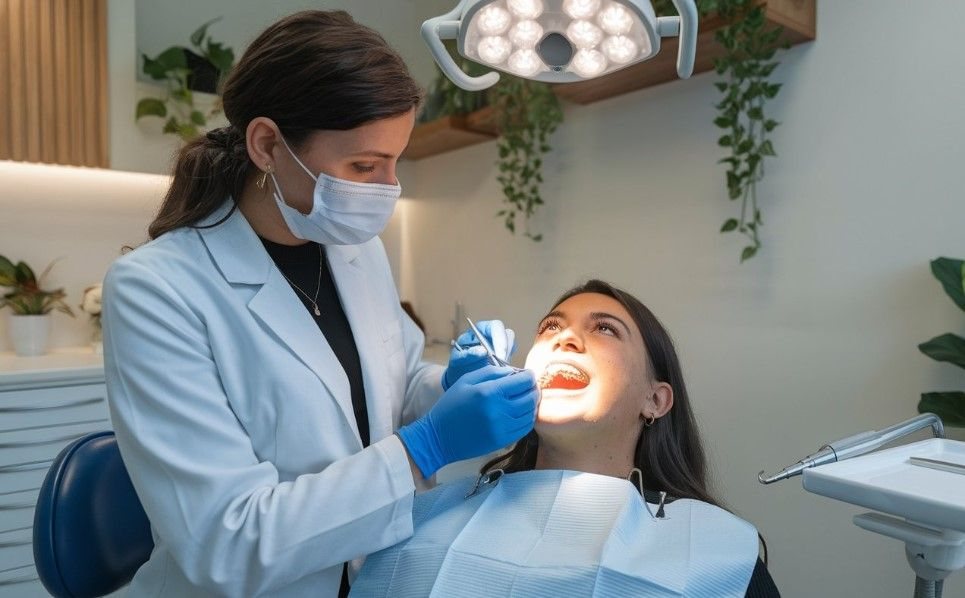
A dentist looks at and feels the whole mouth, including the tongue, cheeks, gums, palate and floor of the mouth, and checks the neck. If something looks suspicious, you'll be referred to an oral surgeon or specialist for a biopsy, which is a quick test on a small sample of tissue. We look for these signs at every routine check-up, which is one more reason to visit every six months.
Frequently asked questions
How long should a mouth ulcer take to heal?
Most heal within 7 to 14 days. Larger ulcers can take a little longer. Anything that hasn't healed in two weeks should be examined.
Why do I keep getting mouth ulcers?
Repeated ulcers are often linked to stress, minor injuries or low iron, B12 or folate. If they come back often, a blood test through your doctor can help find the cause.
Is a white patch in the mouth always serious?
No. Many white patches are caused by friction or a fungal infection and clear up. But a white patch that doesn't rub off and doesn't go away should be examined, especially if you use tobacco.
Can a dentist tell if an ulcer is cancer?
A dentist can spot signs that need further testing, but only a biopsy can confirm or rule out cancer. That's why a non-healing ulcer should be checked rather than watched for months.
If a broken tooth is cutting your cheek, see our guide on what to do in a dental emergency.
Book a consultation in GK-1
If an ulcer or patch in your mouth hasn't healed in two weeks, book a quick check. Ark Dental Global is at R-27, 1st Floor, Greater Kailash-1, New Delhi 110048, a short drive from GK-2, CR Park, Kalkaji, Lajpat Nagar and Saket. We are open Monday to Saturday, 10 AM to 8 PM. Call or WhatsApp +91 99905 09300, or book online.